Stitched by Accident: How a Gold Rush Tailor and a Bolt of Canvas Created America's Forever Uniform
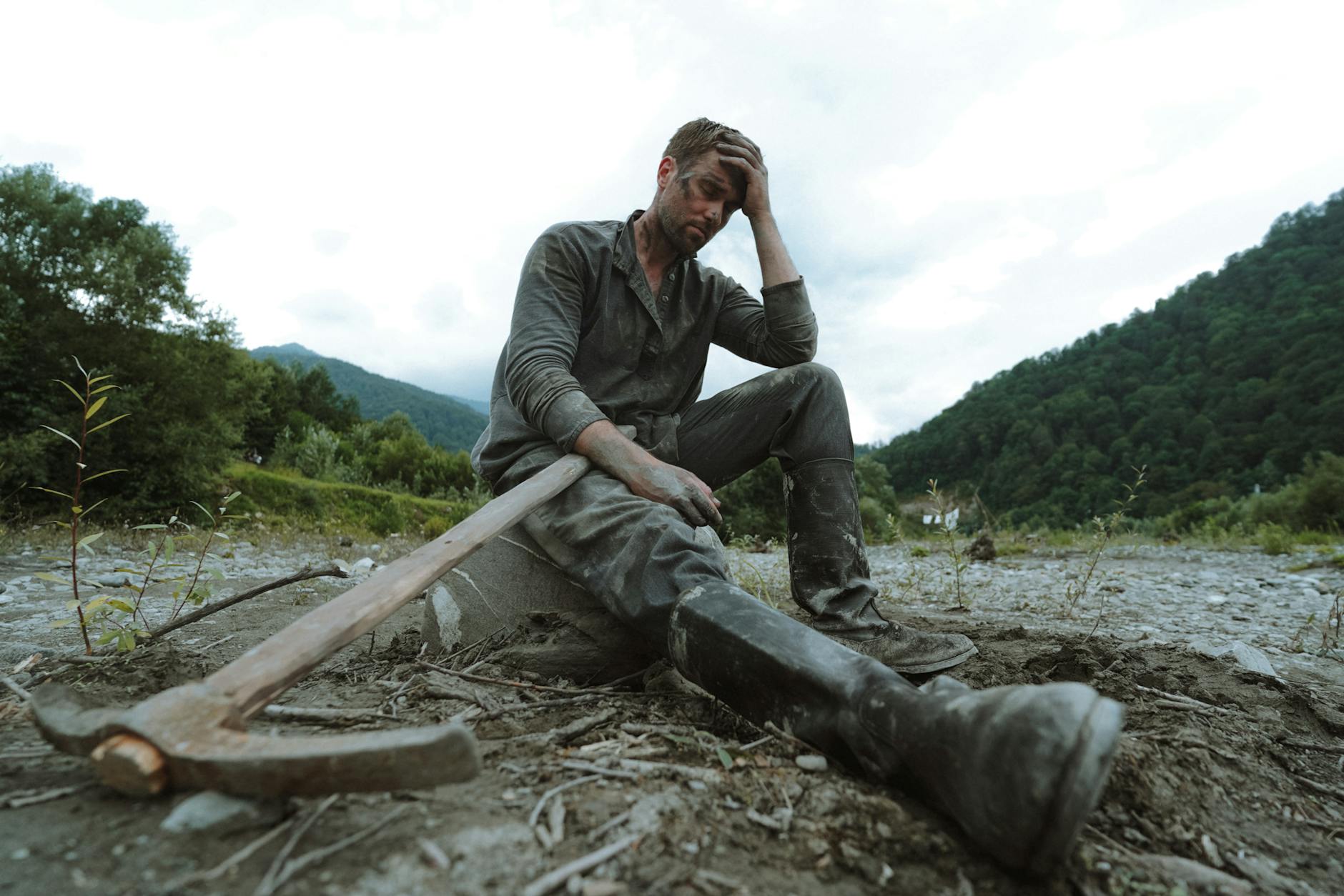
Stitched by Accident: How a Gold Rush Tailor and a Bolt of Canvas Created America's Forever Uniform
Pull on a pair of jeans this morning? Odds are you didn't give it a second thought. They were just there — draped over a chair, folded in a drawer, the automatic answer to the age-old question of what to wear. But the story of how denim became America's default uniform is genuinely strange, rooted not in a design studio or a fashion house, but in the mud and mayhem of the California Gold Rush.
The Problem Nobody Thought to Solve
By 1850, San Francisco had transformed almost overnight from a quiet port town into a chaotic boomtown. Tens of thousands of miners had flooded into Northern California chasing the promise of gold, and they had a very specific, very unglamorous problem: their pants kept falling apart.
The work was brutal. Miners spent their days crouching, hauling, and kneeling in rocky creek beds, and the fabric of the era — lightweight cotton trousers — simply wasn't built for it. Pockets tore away from the seams. Knees gave out. The clothes disintegrated faster than the men could replace them.
Enter a young Bavarian immigrant named Levi Strauss, who had arrived in San Francisco in 1853 not to mine gold but to sell dry goods to the people doing the mining. He was a merchant, practical and opportunistic, supplying canvas, thread, and fabric to the frontier economy. He was good at his job. But the breakthrough that would define his legacy didn't actually come from him first.
The Tailor With a Big Idea and No Money
About 500 miles north, in Reno, Nevada, a tailor named Jacob Davis was quietly losing his mind over the same problem. His customers — laborers, miners, working men — kept coming back with the same complaint. Their pants weren't holding up.
In 1871, Davis hit on a solution that now seems obvious but was genuinely novel at the time: metal rivets. If you reinforced the stress points of a pair of trousers — the pocket corners, the base of the fly — with small copper rivets, the fabric couldn't tear away. It was simple, cheap, and it worked immediately.
Davis started making riveted pants and they sold fast. Word spread. But he had a problem of his own: he didn't have the money to file a patent, and he was terrified someone would steal the idea. So he wrote a letter to his fabric supplier — the man he'd been buying canvas from for years — and proposed a partnership.
That supplier was Levi Strauss.
The Patent That Changed Everything
Strauss saw the idea immediately for what it was. He agreed to cover the patent costs in exchange for shared ownership, and on May 20, 1873, the United States Patent Office granted them the rights to "an Improvement in Fastening Pocket-Openings." It's one of the most understated patent descriptions in American history.
The original fabric wasn't even denim. The first riveted work pants Strauss and Davis produced were made from brown canvas — the same sturdy material used for tents and wagon covers. Denim came later, dyed with indigo to create that distinctive blue, and it turned out to be the better material: softer, more comfortable, and durable enough to handle the work.
Those early pairs weren't called jeans. They were called "waist overalls," and they were sold strictly as workwear. Farmers bought them. Railroad workers bought them. Cowboys bought them. For the first several decades of their existence, blue jeans were purely functional — the kind of garment you wore because you had a job to do, not because you were making a statement.
From the Ranch to the Runway
The shift started slowly, somewhere in the 1930s, when dude ranches became fashionable vacation spots for wealthy Easterners. City visitors watched ranch hands in their worn denim and wanted in. They bought pairs as souvenirs, wore them back home, and something clicked. Jeans carried a kind of rugged authenticity that no amount of money could manufacture — which was ironic, given how cheap they were.
By the 1950s, they had become a full-blown cultural symbol. James Dean wore them. Marlon Brando wore them. Suddenly, denim wasn't workwear — it was rebellion, youth, and freedom stitched into two legs and a waistband. Schools banned them. Parents disapproved of them. Which, of course, made teenagers want them more.
The decades that followed only deepened the mythology. Bell-bottoms in the '70s. Designer denim in the '80s. Grunge in the '90s. Each generation remade jeans in its own image, and somehow the garment absorbed every reinvention without losing its identity.
Why It Still Matters
Today, the global denim market is worth well over $60 billion, and Americans buy roughly 450 million pairs of jeans every year. There are jeans for job interviews and jeans for funerals, jeans that cost $30 at Target and jeans that cost $500 at a boutique in SoHo. The garment has traveled so far from its origins that it's almost unrecognizable as the same object.
But trace it back and the story is still there: a tailor in Nevada who needed a fix for torn pockets, a merchant in San Francisco who had the capital to back the idea, and a bolt of canvas that happened to be available at the right moment.
Levi Strauss and Jacob Davis didn't set out to dress America. They were solving a small, practical problem for men who worked with their hands. The fact that their solution ended up in virtually every closet in the country — and in wardrobes across the world — is one of those backstories that fashion history rarely gets around to telling properly.
Now you know where your jeans actually came from.