The Clasp Nobody Wanted: How the Zipper Spent 20 Years Begging to Be Taken Seriously
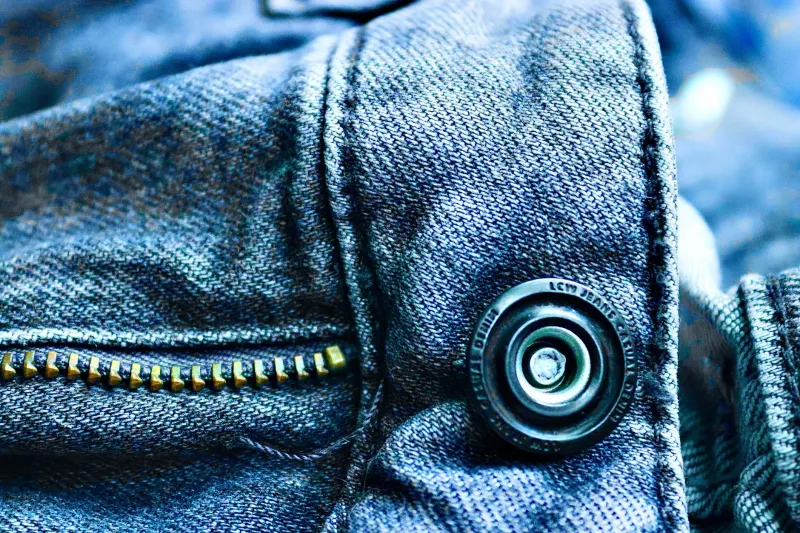
Every morning, without thinking about it, most Americans use a zipper somewhere. On their jeans. Their jacket. Their bag. Their boots. The zipper is so woven into the basic mechanics of getting dressed that imagining clothing without it feels almost abstract.
Which makes it genuinely strange that for the better part of two decades, almost nobody wanted anything to do with it.
This is the story of one of history's most stubbornly rejected inventions — and the unlikely chain of events that finally forced the world to pay attention.
The Man Who Hated Buttons
Whitcomb Judson was a mechanical engineer from Chicago with a restless, problem-solving mind and, by some accounts, a bad back that made bending down to button his boots a daily misery. In 1890, he set out to design a faster alternative to the rows of small hooks and buttons that held together most American clothing and footwear of the era.
By 1893, he had a working prototype: a sliding clasp mechanism that interlocked two rows of hooks and eyes with a single continuous motion. He called it the "Clasp Locker" and brought it to the Chicago World's Fair that year, fully expecting the public to recognize a revolution in personal convenience.
They did not.
The device attracted mild curiosity at the fair and almost no commercial interest. The mechanism was complex, expensive to manufacture, and prone to jamming. It required precise alignment to work properly — and in the mass-market clothing of the 1890s, precise wasn't really on the menu.
Judson found one customer: the U.S. Postal Service, which ordered twenty of his devices for mail pouches. That was essentially it.
Enter the Engineer Who Wouldn't Let It Die
In 1906, a Swedish-American engineer named Gideon Sundback joined the company Judson had founded to commercialize his invention. Sundback was methodical where Judson had been inventive, and he immediately understood the core problem: the original design simply wasn't reliable enough for everyday use.
For the next seven years, Sundback redesigned the mechanism from scratch. He increased the number of interlocking teeth, improved their shape, and refined the slider to reduce jamming. By 1913, he had filed a patent for what he called the "Separable Fastener" — a device that was recognizably the zipper we know today.
And again, the fashion industry shrugged.
American tailors and garment manufacturers were, at this point, deeply skeptical. Buttons worked. Buttons were cheap. Buttons could be repaired by anyone with a needle and thread. Why would a clothing manufacturer take a risk on an expensive, unfamiliar mechanism that their customers didn't know how to use?
The resistance was partly practical and partly psychological. Buttons had been the dominant clothing fastener for centuries. Changing them wasn't just a manufacturing decision — it was a cultural one.
The Boot That Broke the Stalemate
The zipper's first real commercial success had nothing to do with fashion. It had to do with children.
In 1923, the B.F. Goodrich Company began using Sundback's fastener on rubber galoshes — waterproof overshoes designed to keep feet dry in rain and snow. For children especially, the appeal was obvious: no more wrestling with buckles and buttons with cold, wet fingers. You just pulled the slider and the boot was on.
Goodrich's marketing team gave the device its name during this period. The sound it made — that crisp, satisfying zip — became the product's identity. The "zipper" was born, and for the first time, it had a consumer base.
But it was still just a boot fastener. Getting from rubber galoshes to mainstream clothing required one more push.
World War I and the Utility Argument
Military procurement during World War I had already introduced the zipper to flying suits and money belts for U.S. servicemen — applications where reliable, one-handed operation under pressure was genuinely valuable. When soldiers returned home familiar with the device, the cultural barrier began to lower.
Throughout the 1920s, zipper-fastened clothing began appearing in men's workwear and sportswear — categories where practicality outweighed tradition. By the early 1930s, children's clothing manufacturers had adopted the zipper enthusiastically, pitching it to parents as a tool for teaching kids to dress themselves.
The fashion industry remained the last holdout.
Fashion Finally Folds
The breakthrough moment came in 1937, when the fashion press declared the zipper the winner of what newspapers at the time actually called the "Battle of the Fly" — a public debate over whether zippers or buttons were more appropriate for men's trousers.
Designers including Elsa Schiaparelli had already begun using decorative zippers in high-fashion garments through the 1930s, treating the hardware as a design element rather than just a functional one. Suddenly the zipper wasn't just practical — it was modern. It was the future, rendered in metal.
World War II sealed the deal. Metal rationing during the war years limited zipper production, but when restrictions lifted, the postwar American clothing industry adopted the zipper wholesale. By the 1950s, it was standard in jeans, jackets, dresses, and luggage across every price point.
Whitcomb Judson died in 1909, never having seen his invention succeed. Gideon Sundback lived until 1954 and watched the fastener he'd spent years perfecting become one of the most manufactured objects on earth.
The Lesson in the Teeth
The zipper's story is a useful reminder that good ideas don't automatically win. The clasp locker worked in 1893. The separable fastener worked in 1913. The technology was real and functional long before the market was ready for it.
What changed wasn't the invention. It was the context around it — a world war, a children's boot, a marketing team with a gift for naming things, and a fashion industry that finally ran out of reasons to say no.
Next time you zip up your jacket without thinking about it, consider that someone spent twenty years trying to convince the world that was worth doing.
They were right. It just took a while for everyone else to catch up.