No Patent, No Inventor, No Eureka Moment: How America Slowly Decided the Baseball Cap Belonged Everywhere

America loves a founding myth. We like our inventions to come with a name, a date, and preferably a good story about a garage or a fever dream or a near-bankruptcy. The baseball cap refuses to cooperate with any of that.
There is no Walter Hunt moment here, no accidental discovery, no single person who woke up one morning and invented the thing. The baseball cap emerged from decades of collective improvisation on 19th-century ballfields, passed through the hands of manufacturers, athletes, and eventually the entire American population, and arrived at its current form without anyone ever quite deciding it was finished.
That unplanned quality is, it turns out, exactly why it's everywhere.
The Floppy Beginning
In the 1840s and 1850s, as baseball was being organized from a loose collection of regional games into something resembling a national sport, players needed something to keep the sun out of their eyes. The solutions they reached for were whatever happened to be available: straw hats, top hats, and a variety of floppy, brimmed caps that looked more like something you'd wear to a picnic than a sporting event.
The Brooklyn Excelsiors, one of the early organized clubs, are often cited as among the first teams to wear a cap with a forward-facing brim in the late 1850s. But calling it a baseball cap in any modern sense would be generous. It was soft, unstructured, and would have been immediately recognizable to any 19th-century laborer as working headwear. The baseball connection was incidental.
What made these early caps specifically baseball caps was simply that baseball players were wearing them. The design wasn't invented for the sport — it was borrowed from the general wardrobe of working-class American men and gradually adapted through use.
The Long Refinement
Through the second half of the 19th century and into the early 20th, baseball caps went through a slow, unglamorous evolution driven mostly by practical complaints. Players wanted a better fit. Teams wanted something that wouldn't fall off during a slide. Manufacturers experimented with different crown shapes, brim lengths, and materials.
The pillbox cap — a flat-topped, round design with a short brim — had a brief run of popularity in the 1870s and 1880s, including with the early Pittsburgh Pirates. It looked, frankly, like a hat from a children's illustration, and it didn't survive. The market kept nudging the design toward something more structured and functional.
 Photo: Pittsburgh Pirates, via pittsburghbaseballnow.com
By the 1900s, the basic silhouette we'd recognize today — a rounded crown, a stiff forward brim, a button on top — was largely established. But it was still, at this point, firmly a sports object. Civilians didn't wear baseball caps. That wasn't what they were for.
The Fitted Cap and the Shift to Identity
The mid-20th century brought two changes that would alter the cap's trajectory permanently.
The first was manufacturing. In the 1950s, New Era Cap Company — a Buffalo-based manufacturer that had been making baseball caps since the 1930s — began producing what would become the standard fitted cap for Major League Baseball. The structured, fully fitted design gave the cap a cleaner, more intentional look. It wasn't floppy. It wasn't improvised. It was a finished object.
The second change was television. As baseball broadcasts became a fixture of American living rooms, the cap became one of the most visible pieces of sports equipment in the country — not just to fans at the stadium, but to everyone. Kids started wearing their team's cap not as athletic equipment, but as an expression of loyalty. The cap moved from the field to the street.
This was the moment the baseball cap stopped being a sports implement and started being a cultural object. The transition happened gradually, without announcement, and nobody in the cap business was initially sure what to make of it.
The Adjustable Era and the Democratization of the Brim
Fitted caps required knowing your hat size, which limited their appeal as casual wear. The adjustable snapback cap — which had existed in various forms for decades — addressed this problem neatly. One size, more or less, fit everyone. By the 1970s and 1980s, promotional snapbacks were everywhere: gas stations, car dealerships, feed stores, and eventually every sporting goods retailer in the country.
The cap had fully escaped the ballfield. Farmers wore them. Truckers wore them. Construction workers wore them. The foam-front mesh-back trucker cap became its own cultural artifact, later reclaimed ironically by the early-2000s hipster set before settling into a kind of permanent nostalgic appeal.
Then came the 1990s, and the backward cap.
The Backward Brim and What It Meant
Catchers had been wearing their caps backward under their masks for decades — practical, unremarkable. But when Ken Griffey Jr. started wearing his cap backward during batting practice and home run derbies in the early 1990s, the gesture carried a different charge. It was loose. It was cool. It was explicitly not the way the cap was supposed to be worn.
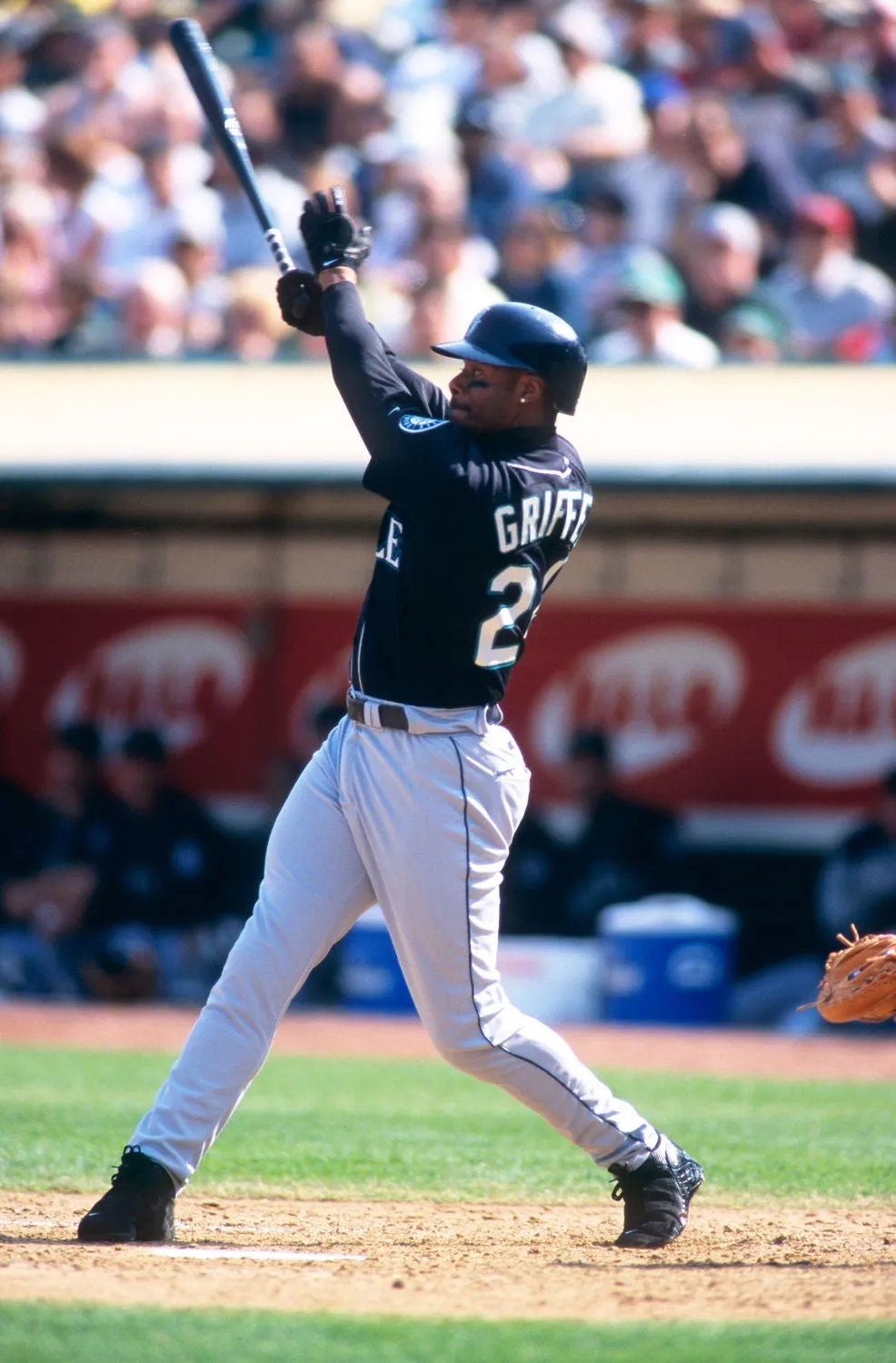 Photo: Ken Griffey Jr., via baseballhall.org
Hip-hop culture had already been putting its own stamp on the baseball cap — adjusting the brim, leaving the sticker on the flat bill, using the cap as a canvas for identity and affiliation. The backward cap folded into this broader reinterpretation of the object. Wearing it backward was a statement: I know the rules, and I'm choosing not to follow them.
Flatbill caps, snapbacks with team logos, and eventually the luxury streetwear collaborations of the 2010s all flowed from the same source: a hat that had no fixed meaning because nobody had ever assigned it one in the first place.
The Hat That Belongs to Everyone
What makes the baseball cap genuinely unusual in American fashion history is that it never belonged to a single class, subculture, or demographic for long enough to get locked in. It started with working-class athletes, moved to rural laborers, got claimed by urban youth culture, and somehow ended up on the heads of suburban dads, fashion week attendees, and presidents on casual Fridays.
No single inventor decided this would happen. No marketing campaign engineered it. The baseball cap just kept being useful — for blocking the sun, for carrying a team's colors, for signaling a mood or an allegiance or a deliberate lack of effort.
Three hundred years from now, if someone digs up an early-21st-century American time capsule, the baseball cap might be the single most recognizable object inside it. And the story of how it got there is just: everyone kept reaching for it, for different reasons, until it became the one hat that belonged to no one in particular — which meant it belonged to everyone.