The Silk Knot That Ran American Business — Before the Necktie Buried It
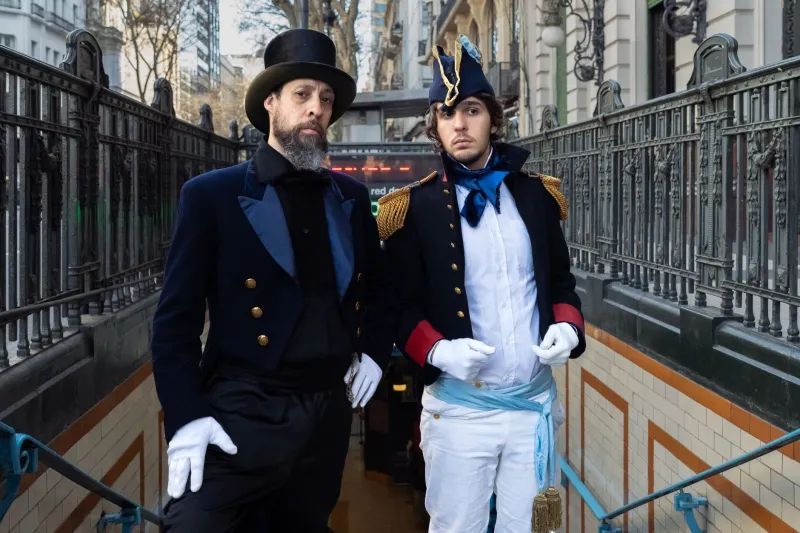
Walk into any American office building today and the neckwear story is pretty predictable. The ones who wear ties at all wear them long, narrow, and knotted tight at the collar. It's a uniform so standard that most people don't even think of it as a choice anymore — it's just what a tie looks like.
But for a long stretch of American history, that wasn't the dominant style at all. The men running banks, arguing cases in federal court, and delivering speeches on the floor of Congress were wearing something altogether different: a loosely knotted, often billowing piece of cloth called a cravat. And the story of how it lost its grip on American professional life is more interesting than you might expect.
It Started With Mercenaries
The cravat's origin story begins in 17th century Europe, specifically with Croatian soldiers fighting in the Thirty Years' War. These mercenaries wore a distinctive knotted cloth around their necks — part practical (keeping the collar closed in cold weather), part identification, part style. When they arrived in France, the Parisian court took notice.
Louis XIV, who was famously obsessed with personal presentation, adopted the look almost immediately. The French called the garment a cravate, their approximation of Croat, and within a decade it had spread across European aristocracy. By the time it crossed the Atlantic with colonial settlers and later with the growing American merchant class, it had already gone through numerous regional variations — some stiff and structured, some loose and flowing, some elaborate enough to require a servant's help to tie correctly.
In America, the cravat settled into a version that suited the new country's particular brand of ambition: less theatrical than its European counterparts, but still a clear marker of standing. If you wore a well-knotted cravat in 1840s Philadelphia or Boston, you were communicating something specific about your place in the social order.
The American Cravat in Its Prime
Through most of the 19th century, the cravat was the default neckwear for men who wanted to look serious. Presidents wore them. Abraham Lincoln is frequently depicted in a simple black cravat. Ulysses S. Grant favored them throughout his public life. The style appeared in courtrooms, counting houses, and legislative chambers from New York to Washington.
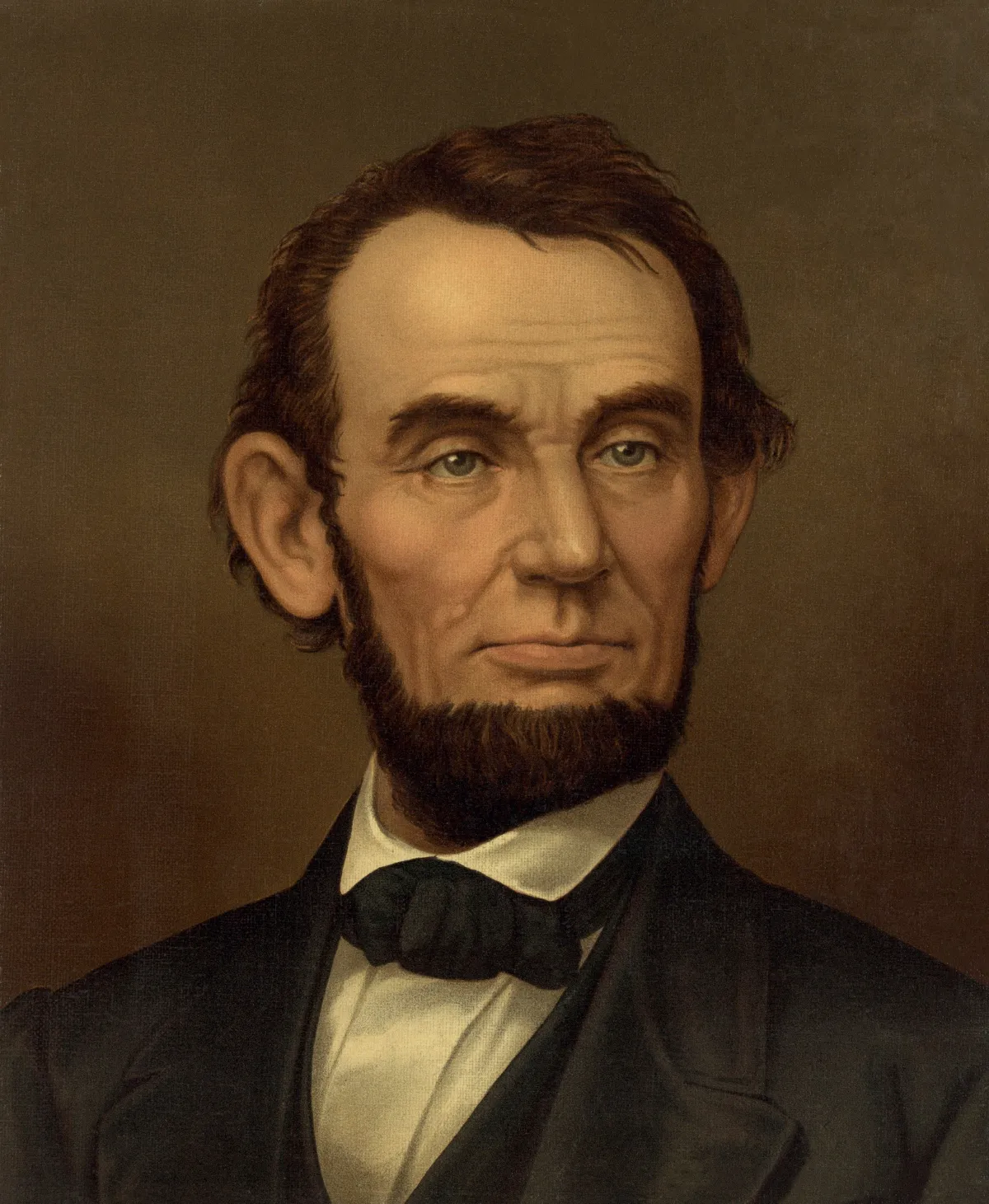 Photo: Abraham Lincoln, via cdn.antiquestradegazette.com
What made the cravat particularly appealing to American professional culture was its flexibility. Unlike the rigid, heavily starched collar arrangements popular in formal European dress, the cravat allowed for individual expression within a recognizable framework. You could wear it knotted loosely for a relaxed afternoon look or tied more firmly for a formal occasion. The same piece of cloth could read as casual or commanding depending on how you handled it.
Haberdasher shops in cities like New York and Philadelphia sold cravat-tying guides alongside the fabric itself. There were named knots — the Waterfall, the Napoleon, the Mailcoach — each carrying its own subtle social signal. Men who knew their knots were men who understood the codes of professional life.
The Moment the Necktie Won
The shift didn't happen overnight, but it accelerated sharply in the early decades of the 20th century. Several forces converged to push the cravat toward the margins.
First, industrialization changed the nature of professional dress itself. As more American men moved into office environments — the new insurance companies, banks, and corporate firms expanding rapidly after 1900 — there was growing pressure toward standardization. The necktie, with its consistent length and structured knot, fit neatly into an emerging ideal of the efficient, uniform professional. The cravat's looseness began to read as old-fashioned rather than distinguished.
Second, the ready-to-wear clothing industry was expanding fast, and neckties were far easier to manufacture and sell at scale than cravats, which required more fabric and more skill to wear correctly. Department stores pushed ties. Men's magazines promoted them. The advertising industry, still in its early decades, helped build an association between the modern necktie and the modern American man.
By the 1920s, the cravat had largely retreated to artistic circles, older men who'd grown up with it, and a handful of European-influenced social clubs. It became, in the American cultural imagination, a slightly theatrical choice — something worn by painters, eccentrics, and men who considered themselves above ordinary convention.
What the Cravat Left Behind
Here's the thing worth noting: the necktie that replaced the cravat borrowed almost everything from it. The basic concept — a decorative cloth knotted at the throat — is identical. The language carried over too. We still talk about neckwear, still describe certain tie styles as flowing or soft. The ascot, a close cousin of the cravat that survived in reduced form, still appears at horse races and in the wardrobes of men who know their sartorial history.
And in recent years, something interesting has been happening. As formal dress codes have relaxed across American professional life — tech campuses, creative agencies, even some financial firms — younger men have begun revisiting the cravat as an alternative to the necktie's rigid formality. Menswear blogs have covered the trend. A handful of designers have included cravat-style neckwear in recent collections.
Whether it amounts to a genuine comeback or stays a niche interest remains to be seen. But the cravat's story is a useful reminder that the things we treat as permanent fixtures of professional life — the standard tie, the expected knot, the default uniform — usually have a history that's a lot more contingent than they look. They won for reasons that made sense at a particular moment. And those moments, eventually, pass.
Somewhere in a vintage menswear shop in Brooklyn or Chicago, someone is probably tying one right now.