A North Carolina Mill Worker's Side Project Accidentally Created Fashion's Most Controversial Garment

The Problem Nobody Asked Him to Solve
Allen Gant Sr. wasn't trying to revolutionize women's fashion when he sat down at his sewing machine in 1959. The textile worker at Glen Raven Mills in North Carolina had a much simpler goal: make his pregnant wife Ethel more comfortable.
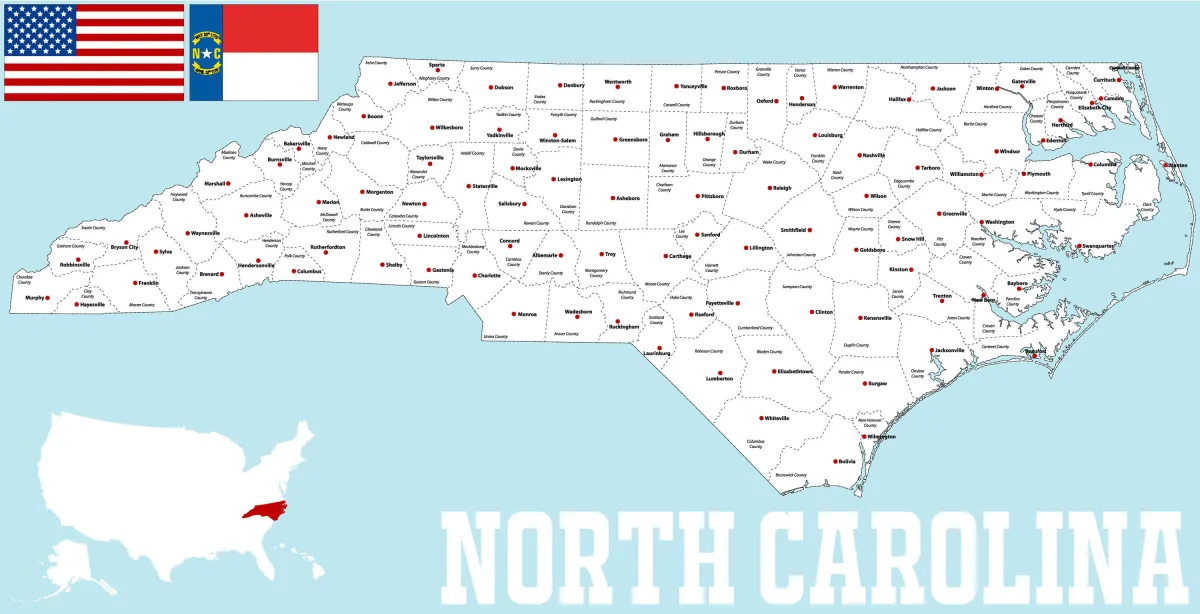 Photo: North Carolina, via www.guideoftheworld.com
 Photo: Glen Raven Mills, via www.mbkahn.com
 Photo: Allen Gant Sr., via archive.org
Ethel was struggling with the standard women's hosiery of the era—stockings held up by garter belts or girdles. The constant tugging, adjusting, and general discomfort of the contraption was particularly miserable during pregnancy. So Allen, who understood textiles from his day job, decided to experiment.
His solution was almost embarrassingly simple: he sewed a pair of panties directly onto stockings, creating one continuous garment that eliminated the need for garters entirely. He called his invention "Panti-Legs."
Neither Allen nor Ethel could have predicted that this bedroom tinkering project would reshape an entire industry, redefine workplace dress codes across America, and eventually become a symbol of both women's liberation and oppression.
From Basement Experiment to Corporate Boardroom
Glen Raven Mills wasn't initially interested in Allen's invention. The company was focused on other textile products, and the hosiery market seemed saturated with established players like DuPont and Hanes.
But Allen persisted. He refined his design, registered the trademark, and eventually convinced his employers to give "Panti-Legs" a test run. The company renamed the product "pantyhose" for marketing purposes—a decision that would stick for the next six decades.
The timing was accidentally perfect. The late 1950s and early 1960s were witnessing a dramatic shift in women's fashion. Hemlines were rising, and the mini-skirt revolution was just around the corner. Traditional stockings and garter belts created visible lines under shorter, tighter clothing. Pantyhose solved this problem elegantly.
By 1970, just eleven years after Allen's basement experiment, pantyhose had almost completely replaced stockings in American women's wardrobes. The hosiery industry had been turned upside down.
The Cultural War Nobody Saw Coming
What started as a comfort innovation quickly became a flashpoint for larger cultural debates about women's autonomy, workplace expectations, and bodily freedom.
Corporate America embraced pantyhose with enthusiasm that bordered on obsession. By the 1970s, most office dress codes explicitly required women to wear pantyhose or stockings. The garment became a symbol of professionalism, respectability, and appropriate feminine presentation.
But many women experienced pantyhose differently. The sheer nylon was prone to runs, expensive to replace, and uncomfortable in hot weather. Unlike men's socks, which could last for years, pantyhose were essentially disposable—a recurring expense that men's professional wardrobes didn't require.
Feminist critics began pointing out the absurdity: why were women required to wear an expensive, fragile, uncomfortable garment that served no practical purpose beyond conforming to arbitrary beauty standards?
The Rebellion Begins
The first cracks in pantyhose's dominance appeared in the 1990s. Younger women entering the workforce began quietly rebelling against hosiery requirements. Some companies responded by relaxing dress codes, while others doubled down on enforcement.
The turning point came with the rise of casual Friday policies and the general relaxation of corporate dress codes during the dot-com boom. Suddenly, workplaces that had required pantyhose for decades were allowing jeans on certain days.
Celebrities began appearing at formal events with bare legs, sending a signal that pantyhose were no longer mandatory for looking polished or professional. Fashion magazines started promoting the "no hosiery" look as modern and confident.
The Great Pantyhose Collapse
The statistics tell the story of pantyhose's dramatic fall. In 1995, American women purchased 1.2 billion pairs of pantyhose annually. By 2006, that number had dropped to 600 million. By 2010, it was under 400 million.
The decline wasn't gradual—it was a fashion cliff. Entire sections of department stores that had been dedicated to hosiery began shrinking or disappearing entirely. Brands that had built their entire business model around pantyhose were forced to diversify or close.
Younger generations simply never adopted the habit. For women who came of age after 2000, pantyhose weren't a symbol of professionalism—they were a relic of their mothers' generation, associated with outdated workplace restrictions and uncomfortable beauty standards.
The Accidental Legacy
Allen Gant Sr.'s simple solution to his wife's comfort problem had inadvertently created one of the most contentious garments in American fashion history. Pantyhose became a perfect storm of technological innovation, cultural timing, and unintended social consequences.
The invention that was supposed to make women's lives easier instead became a symbol of the complex negotiations women face between comfort, professionalism, and social expectations. It demonstrated how quickly fashion rules can shift from liberating to oppressive, and how the same garment can represent freedom and constraint simultaneously.
Today, pantyhose survive mainly in specific professional contexts—flight attendants, some corporate environments, formal events—but their era of universal dominance is over. Allen's accidental invention had a remarkable fifty-year run before cultural changes finally caught up with it.
The story of pantyhose reveals how even the most practical innovations can become caught up in larger cultural wars they never intended to start. Sometimes the most controversial fashion trends begin with the simplest human desire: just trying to make someone a little more comfortable.