Pink Was a Boy's Color. Then a Marketing Decision Changed Everything — And We Forgot It Was Ever Any Different.
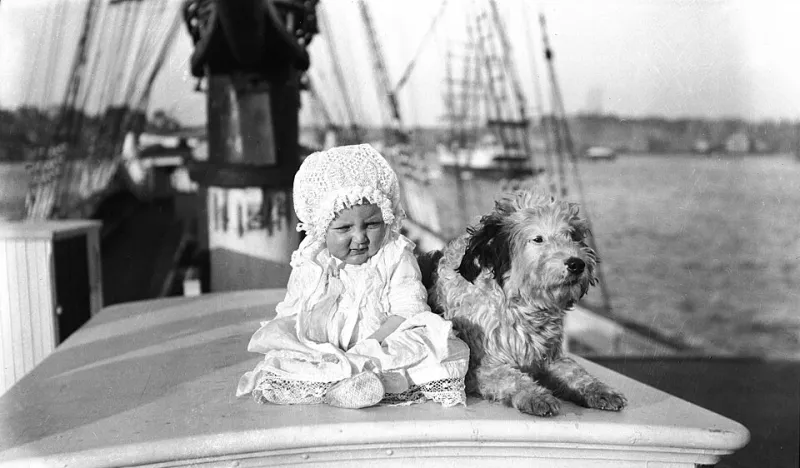
Photo: Australian National Maritime Museum on The Commons, No restrictions, via Wikimedia Commons
Pink Was a Boy's Color. Then a Marketing Decision Changed Everything — And We Forgot It Was Ever Any Different.
Walk into any big-box baby store in America and the color coding is immediate and total. One side of the aisle is pink. The other is blue. The system feels so natural, so ancient, so deeply embedded in how we understand gender, that most people assume it must have always been this way — something rooted in biology, in tradition, in human nature itself.
It wasn't. The pink-for-girls, blue-for-boys convention is, in historical terms, extremely recent. And it didn't emerge from biology or tradition. It emerged from marketing.
What Color Actually Meant Before the Switch
For most of Western history, infant clothing was almost entirely white. The reason was practical: white fabric could be boiled clean, which mattered enormously in an era before modern sanitation. Boys and girls wore identical white dresses until the age of six or seven, when they were old enough to be dressed in gender-specific adult-style clothing. The idea of color-coding babies by sex simply wasn't a priority when keeping them alive was the more pressing concern.
When color did enter children's clothing in the nineteenth century, the associations were almost the reverse of what we know today. Pink — understood as a pale, diluted version of red — carried masculine connotations. Red was the color of war, strength, and physical vigor. Its softer derivative was considered appropriate for boys precisely because it suggested those qualities in a gentler form suitable for children.
Blue, meanwhile, had centuries of association with the Virgin Mary in Christian iconography. Mary was almost universally depicted in blue robes in Western religious art, and blue therefore carried associations of purity, delicacy, and feminine virtue. It was considered the more appropriate color for girls.
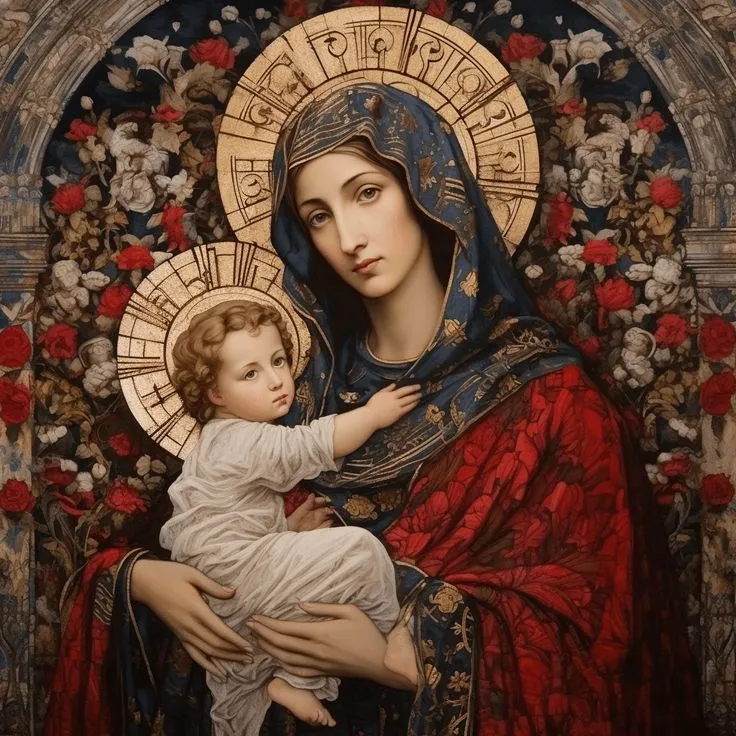 Photo: Virgin Mary, via i.pinimg.com
This was not a fringe opinion. In 1918, the trade publication Earnshaw's Infants' Department offered clear guidance to retailers: "The generally accepted rule is pink for the boys, and blue for the girls. The reason is that pink, being a more decided and stronger color, is more suitable for the boy, while blue, which is more delicate and dainty, is prettier for the girl."
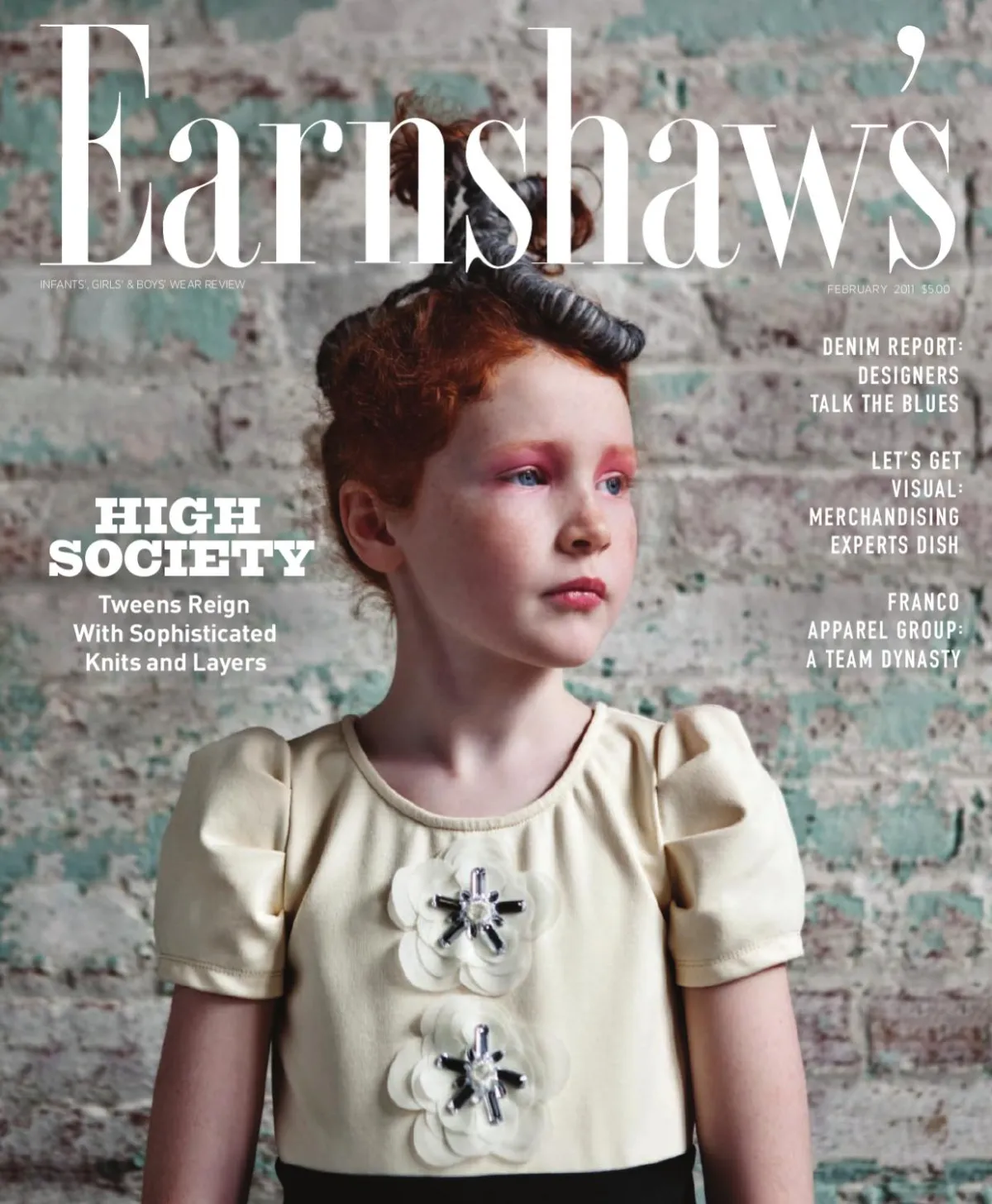 Photo: Earnshaw's Infants' Department, via image.isu.pub
That sentence, written just over a hundred years ago, reads today like a typo. It wasn't.
The Slow Reversal Nobody Noticed
The shift didn't happen overnight, and historians have found it genuinely difficult to pinpoint exactly when it occurred or why. What's clear is that the reversal was underway by the 1940s and largely complete by the 1950s, with the post-World War II consumer boom playing a central role.
Several forces contributed. Department stores began standardizing their color systems for children's clothing during the 1940s, and different regional chains made different calls — some going pink-for-girls, some sticking with the older convention, some switching back and forth. There was no central authority making the decision. It was a gradual drift, driven by retail convenience and marketing instinct rather than any cultural consensus.
What accelerated the standardization was the postwar baby boom and the consumer economy that grew up around it. As American families had children in unprecedented numbers and consumer spending on infant products expanded rapidly, manufacturers and retailers had a powerful financial incentive to differentiate product lines by gender. If boys needed blue products and girls needed pink ones, parents couldn't hand clothing and gear down from one child to the next — they had to buy new.
Gender-coding baby products was, at its root, a strategy for selling twice as much stuff.
The Industry That Cemented the Code
By the 1950s, the baby product industry had largely settled on the pink-for-girls, blue-for-boys system, and it was beginning to be treated not as a convention but as a natural fact. Advertising reinforced the association constantly. Department store displays made the color coding visually inescapable. Parents who had grown up surrounded by the system began to experience it as instinctive rather than learned.
The convention was briefly disrupted in the late 1960s and 1970s, when the women's liberation movement pushed back against rigid gender categories and unisex clothing for children became fashionable in certain circles. Yellows and greens were promoted as neutral alternatives. For a moment, the color wall looked like it might come down.
It didn't. By the 1980s, the pink-blue divide had returned stronger than ever, and the children's product industry had doubled down. Prenatal sex determination through ultrasound, which became widely available during the 1980s, gave the system new commercial fuel: parents who knew their baby's sex before birth could now shop by color from the very beginning, and retailers were ready for them.
Why It Matters That We Got This Wrong
The pink-blue story is fascinating partly because of what it reveals about how quickly a commercial decision can calcify into apparent biological truth. Within two or three generations, a marketing convention became something people experience as innate — a preference so natural it must be hardwired.
Research has repeatedly failed to find solid evidence that color preferences are meaningfully determined by sex at birth. A widely cited 2007 study suggested women showed a slight preference for redder hues, which some headlines breathlessly reported as proof that girls are "born" to like pink. But the study's own authors cautioned against that interpretation, noting that cultural conditioning begins so early and so thoroughly that separating learned preference from innate preference is essentially impossible.
What the history actually shows is something more interesting than biology: it shows how effectively consumer culture can manufacture tradition. The people buying pink onesies today are not following an ancient human instinct. They are following a retail display logic that was invented sometime around the 1940s by people trying to sell more baby clothes.
Walter Hunt sold his safety pin patent for $400 and walked away. The baby product industry sold America an entire gender mythology and nobody even noticed the transaction.